

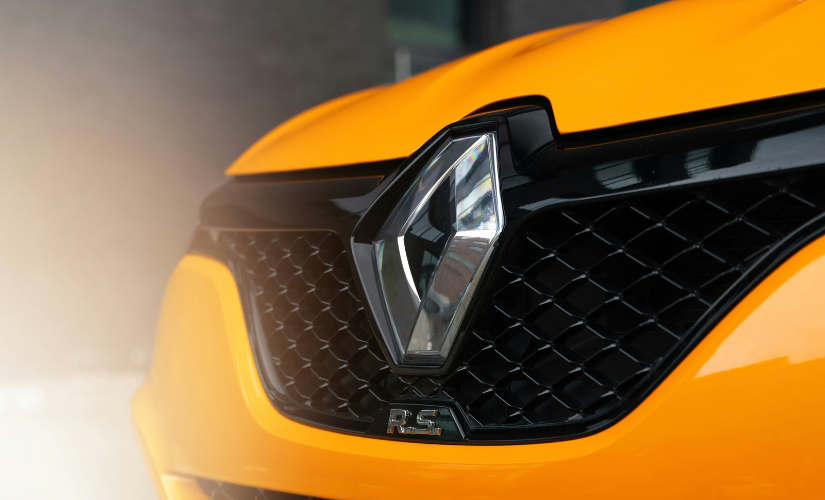
I recently spent some time with the new Renault 5 and came away thinking it might be one of the cleverest new cars launched in years.
Not because it does anything particularly revolutionary… Underneath, it shares much of its engineering with the new Nissan Micra. The two cars use the same basic electric platform and broadly similar technology. On paper, there probably isn’t a huge amount to separate them.
But nobody seems able to stop talking about the Renault.
It has won awards, attracted glowing reviews and generated the sort of genuine public interest most new cars can only dream of. People point at it in the street. They photograph it. They talk about the colours they would choose.
Most importantly, the Renault 5 has personality. Its designers have borrowed heavily from the original car, from the squared-off shape and vertical rear lights to the bright colours and details scattered around the interior. Even the old bonnet vent has been reimagined as a digital charge indicator.
It doesn’t feel like a lazy copy of an old design. It feels like someone has taken the bits people remember fondly and worked out how to make them relevant again.
Renault calls the approach “retro futuristic”. To me it’s just… clever. Nostalgia is an extremely effective shortcut to emotion and the original Renault 5 already means something to people. It reminds them of childhood, family cars, first cars and a period when small cars were allowed to be cheerful rather than aggressive. The new model arrives with decades of stories already attached to it.
Fiat did much the same thing with the modern 500. When it appeared in 2007, it didn’t bring an especially radical mechanical proposition. Much of what sat underneath it was shared with the Fiat Panda. What it offered was a familiar face, a strong identity and an enormous range of colours and personalisation options.
People weren’t simply buying a small Fiat. They were buying a little piece of Italian style and, whether they remembered the original car or not, a connection to its history.
MINI arguably did it even more successfully. The modern MINI was much larger, heavier and more sophisticated than the original. In practical terms it had very little in common with the car that inspired it. But it looked unmistakably like a MINI.
For a genuinely new model though, and particularly for a new brand, there is no archive to raid. There are no childhood memories, famous advertising campaigns or family stories waiting to be reactivated.
Everything has to be built from scratch. And that is becoming harder at a time when cars are becoming increasingly similar.
Safety regulations, aerodynamic requirements and shared vehicle platforms naturally push manufacturers towards comparable shapes. The popularity of SUVs has filled the market with cars of roughly the same proportions, while electric powertrains have removed many of the mechanical cues that once helped distinguish one model from another.
Inside, a large touchscreen, a smaller display in front of the driver, a broad centre console and some ambient lighting have become the default recipe. Features that felt genuinely distinctive a few years ago are now widely available across almost every price point.
That doesn’t mean new brands cannot create personality. But they cannot rely on customers filling in the gaps from memory.
They need to be much more deliberate about what makes them different. That personality has to come through in the design, the colours, the materials, the way the car drives and the small details customers interact with every day. It also needs to extend beyond the product into the advertising, dealership experience, customer service and the way the brand behaves.
There is little value in launching a distinctive-looking car if the communications surrounding it sound exactly like everyone else’s. The automotive industry has become very fond of the same collection of words. Every car is bold, dynamic, innovative, intelligent and designed around the customer.
For communications teams, the temptation is to manufacture a personality with clever language. But personality has to begin with something real.
What does the car do differently? How does it make people feel? What decisions have been made that a competitor would not have made? What does the brand genuinely want to be known for?
The Renault 5 has an enviable answer. It takes something people already love and gives it a new purpose. New brands on the other hand have to create the memories that future products may one day trade on. That takes clarity, confidence and, above all, time.
The good news is that every nostalgic icon was new once. The challenge is building a car with enough personality for people to remember it.


.png)
.png)
.png)
.png)